







Kraken Review
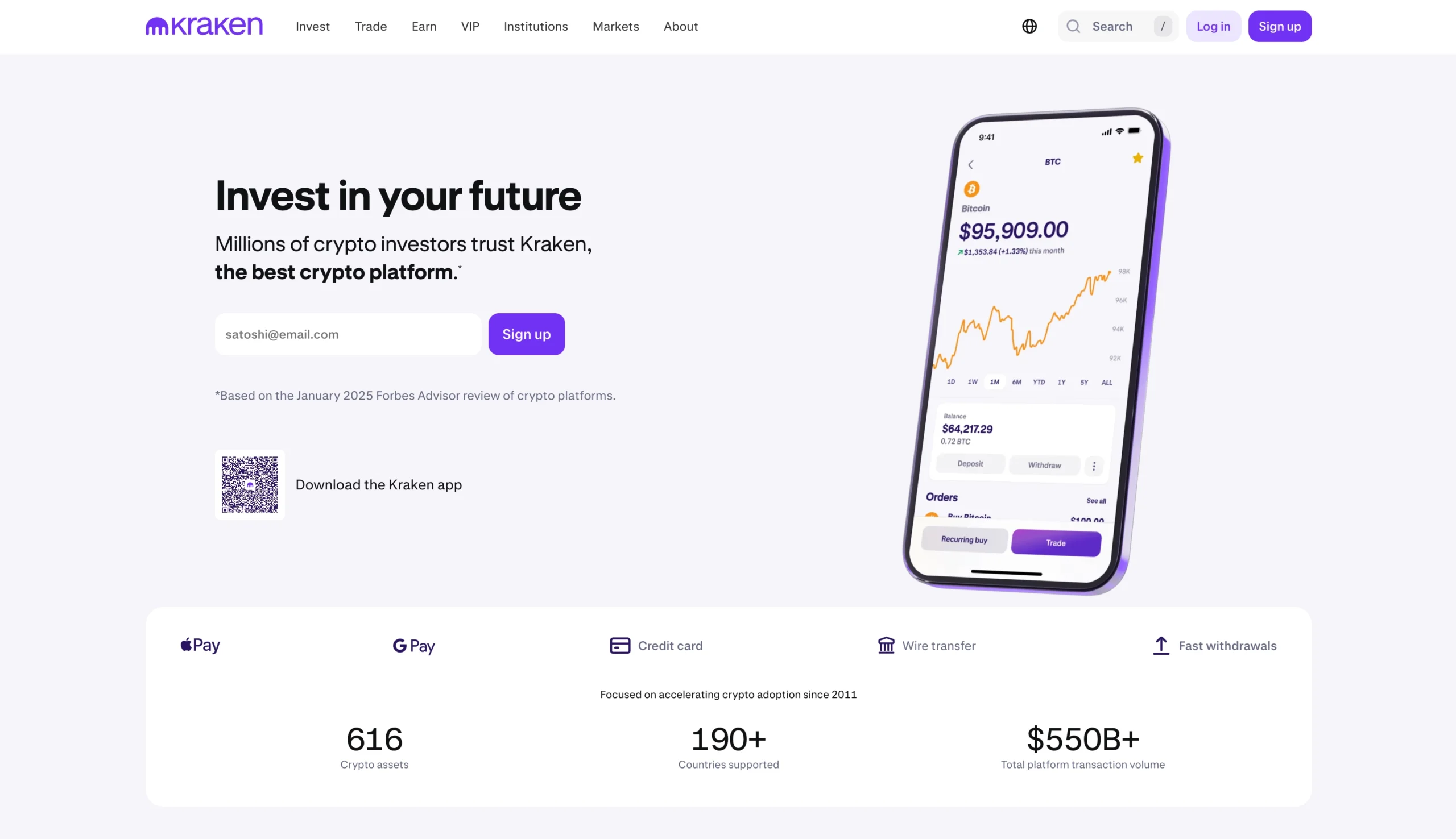
Established in 2011 and based in San Francisco, Kraken stands as one of the longest-running cryptocurrency exchanges. The platform enables users to trade more than 250 cryptocurrencies across various markets, including spot, margin, and futures. With distinct Lite and Pro platforms, Kraken serves both novice and seasoned traders without sacrificing any features.
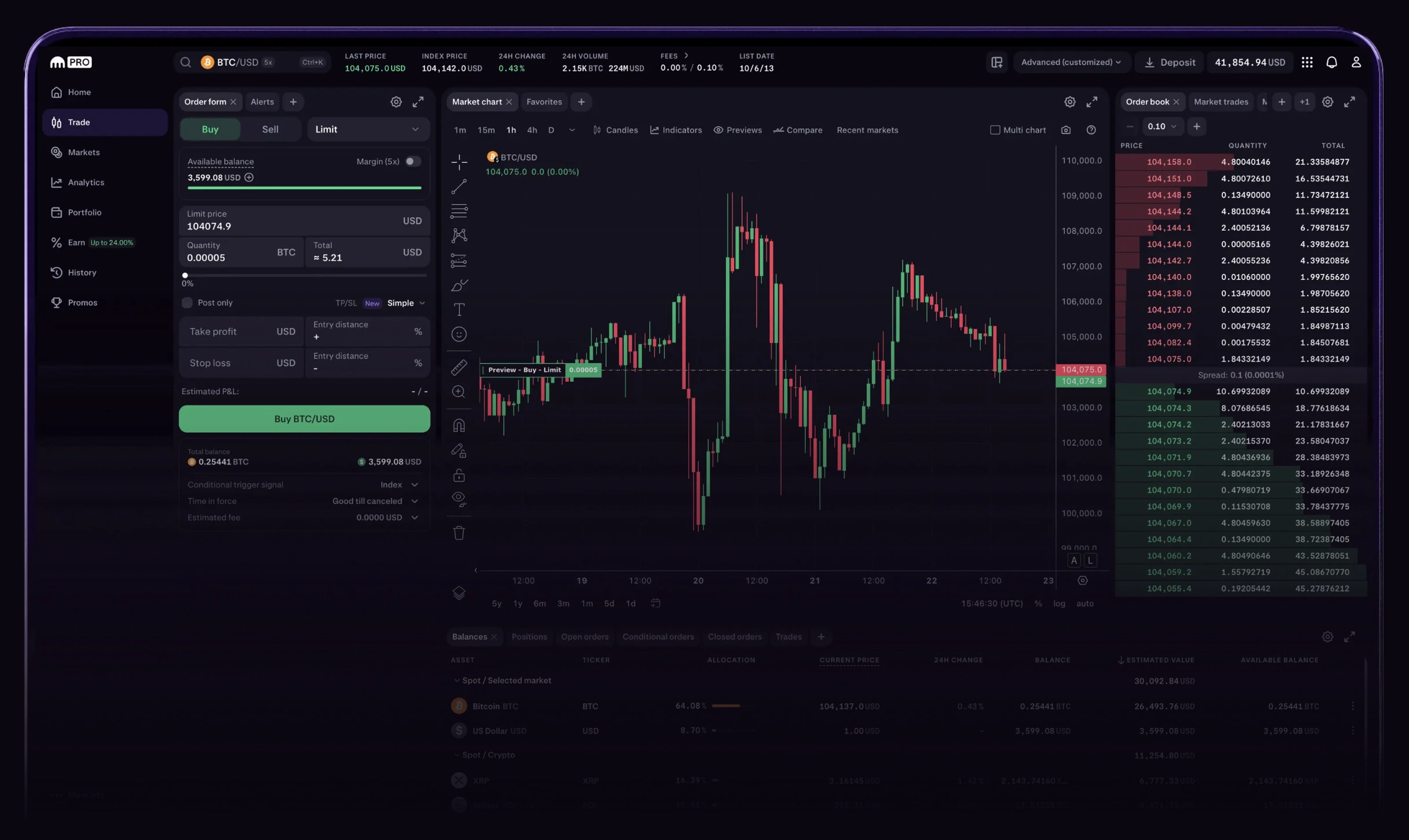
Due to the advanced desktop trading capabilities and competitive fees of Kraken Pro, I consider this exchange ideal for experienced traders, especially those concentrating on derivatives trading. Furthermore, the platform could be advantageous for algorithmic traders, offering support for high-frequency trading, strategy backtesting, and API testing environments.
Table of Contents
Kraken Supported Countries
Kraken accommodates users from over 190 nations and 250 distinct regions, surpassing many competitors such as Binance, Coinbase, and Bybit, which impose stricter geographical limitations. In Europe, individuals from Italy, Spain, and the UK face restrictions on futures trading. The available funding options and support for third-party payment providers differ based on location.
Although Kraken allows users from the United States, it does not provide services to residents of New York and Washington. Furthermore, futures trading, on-chain staking, rewards, and trading between fiat currencies are limited for all users in the US. Certain assets are not available for trading by US residents.
Kraken Account Security
User accounts can be protected through two-factor authentication (2FA) by utilizing applications such as Google Authenticator or Authy, in conjunction with specific passkeys that the exchange supports. Additionally, biometric authentication is available on both desktop and mobile devices, enabling users to access their accounts via FaceID or fingerprint scanners.
I have personally enhanced the security of my Kraken account by integrating 2FA with Google Authenticator, employing fingerprint scanning on my computer, and utilizing FaceID on my mobile device. The setup process for Google Authenticator was both swift and straightforward, while the configuration of biometric authentication was even more rapid. It simply leverages the biometric data already saved on your device, requiring only permission for Kraken to utilize them. This efficient procedure provided an additional layer of security to my account with minimal effort.
FAQs – Kraken Exchange
Is Kraken a safe crypto exchange?
Yes. Kraken is widely considered one of the most secure crypto exchanges. It uses cold storage for most user funds, two-factor authentication, strict internal controls, and regular security audits. Kraken has maintained a strong security record over the years.
Is Kraken regulated?
Kraken operates under regulatory requirements in multiple regions. It is registered as a money services business in the U.S. and complies with local regulations in supported jurisdictions, though availability of services varies by country.
How many coins does Kraken support?
Kraken supports hundreds of cryptocurrencies, including major assets like Bitcoin, Ethereum, Solana, XRP, and a wide range of DeFi, Layer 1, stablecoins, and emerging tokens. The supported coins list is updated regularly.
Does Kraken support fiat deposits and withdrawals?
Yes. Kraken allows fiat deposits and withdrawals using currencies such as USD, EUR, GBP, and others, depending on your region. Payment methods include bank transfers and, in some locations, cards.
Does Kraken support staking?
Kraken supports staking for several cryptocurrencies, allowing users to earn rewards by holding eligible assets. Availability and reward rates depend on the asset and region.



Leave a Reply